Once you have finalized the layout of your bedroom wardrobe, the next step is choosing the right finish for the doors. The finish is the most visible element of your wardrobe and defines the design statement of your room.
The three most popular options for luxury and premium wardrobes are **laminates**, **glass**, and **natural wood veneers**. Each material comes with distinct properties regarding durability, maintenance, cost, and visual style. In this guide, we compare all three options side-by-side.
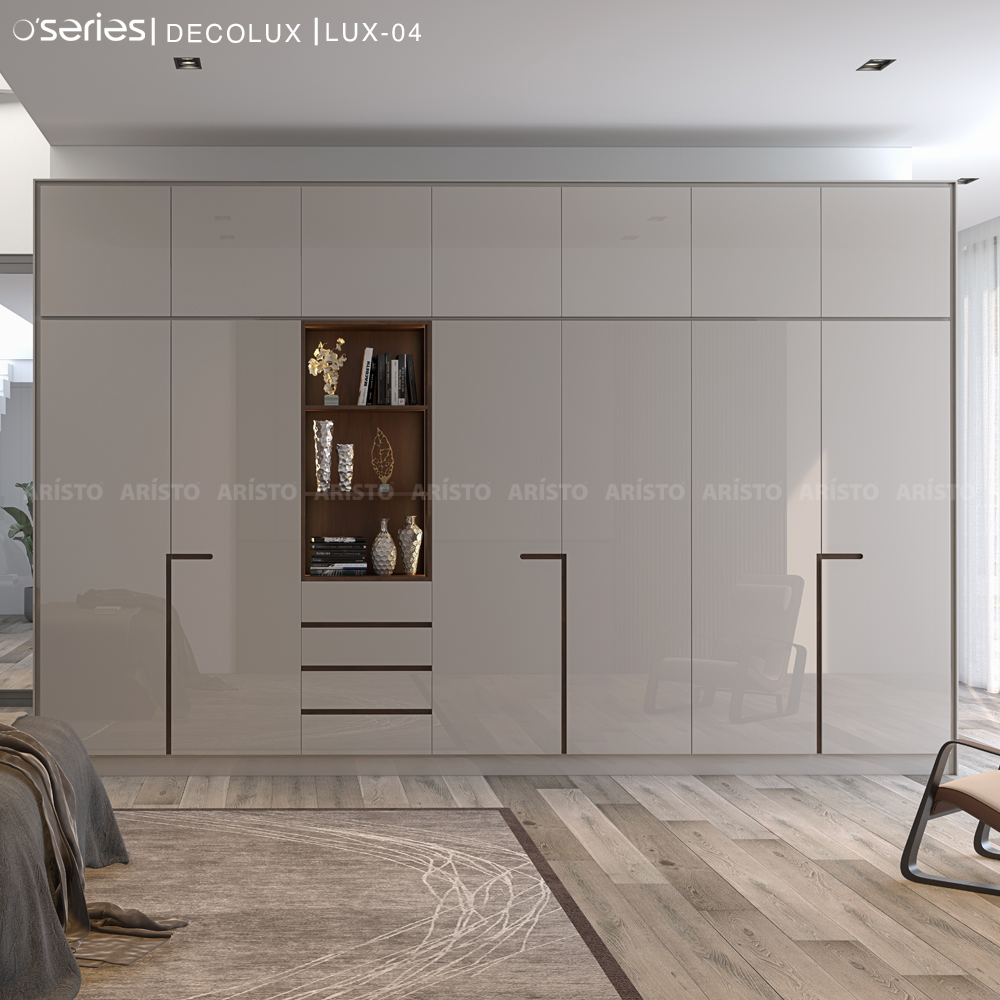
1. Laminate Wardrobes: Practical & Versatile
Laminates are synthetic materials made by pressing paper and plastic resins under high pressure. They are the most common finish due to their practicality:
- Pros: Highly durable, scratch-resistant, moisture-resistant, and incredibly easy to clean with a damp cloth. They are available in thousands of finishes, including matte, high-gloss, textured, and wood-grain patterns.
- Cons: While premium laminates look excellent, they lack the natural depth and touch-texture of genuine wood veneer or the high-end reflectiveness of lacquered glass.
- Best For: Kids' rooms, guest bedrooms, and daily-use wardrobes where durability and low maintenance are the top priorities.
"Laminates offer the best balance of cost, durability, and ease of maintenance, making them an excellent choice for active households."
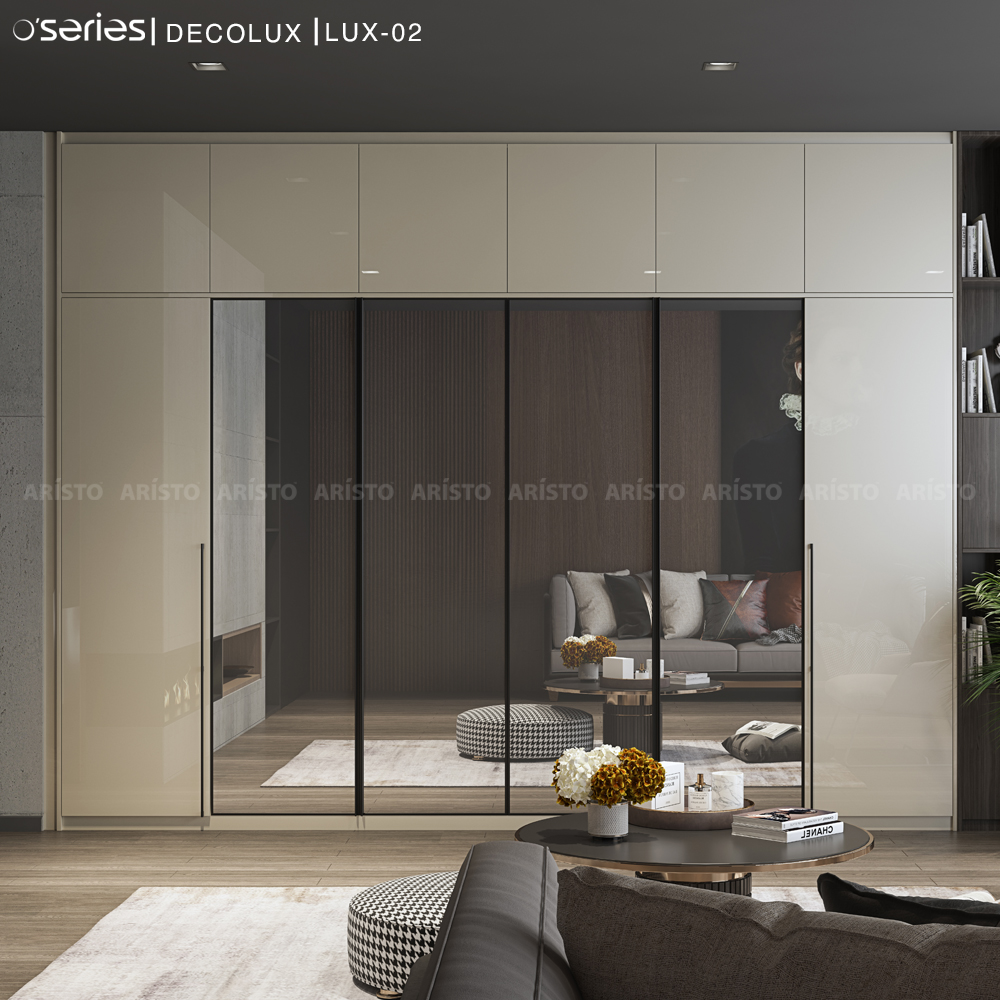
2. Glass Wardrobes: Modern & Spacious
Glass doors (housed in thin aluminum frames) are a dominant trend in modern European wardrobe design:
- Pros: Reflects light to make small bedrooms feel larger. Smoked, bronze-tinted, or fluted glass options look incredibly premium, especially when paired with internal LED lighting.
- Cons: Leaves wardrobe contents semi-visible (requiring constant tidiness). Glass is prone to fingerprint smudges and requires weekly cleaning. It also carries a higher risk of chipping if struck with force.
- Best For: Master walk-in wardrobes and modern minimalist bedrooms where aesthetics and spatial expansion are paramount.
3. Veneer Wardrobes: Warm & Timeless
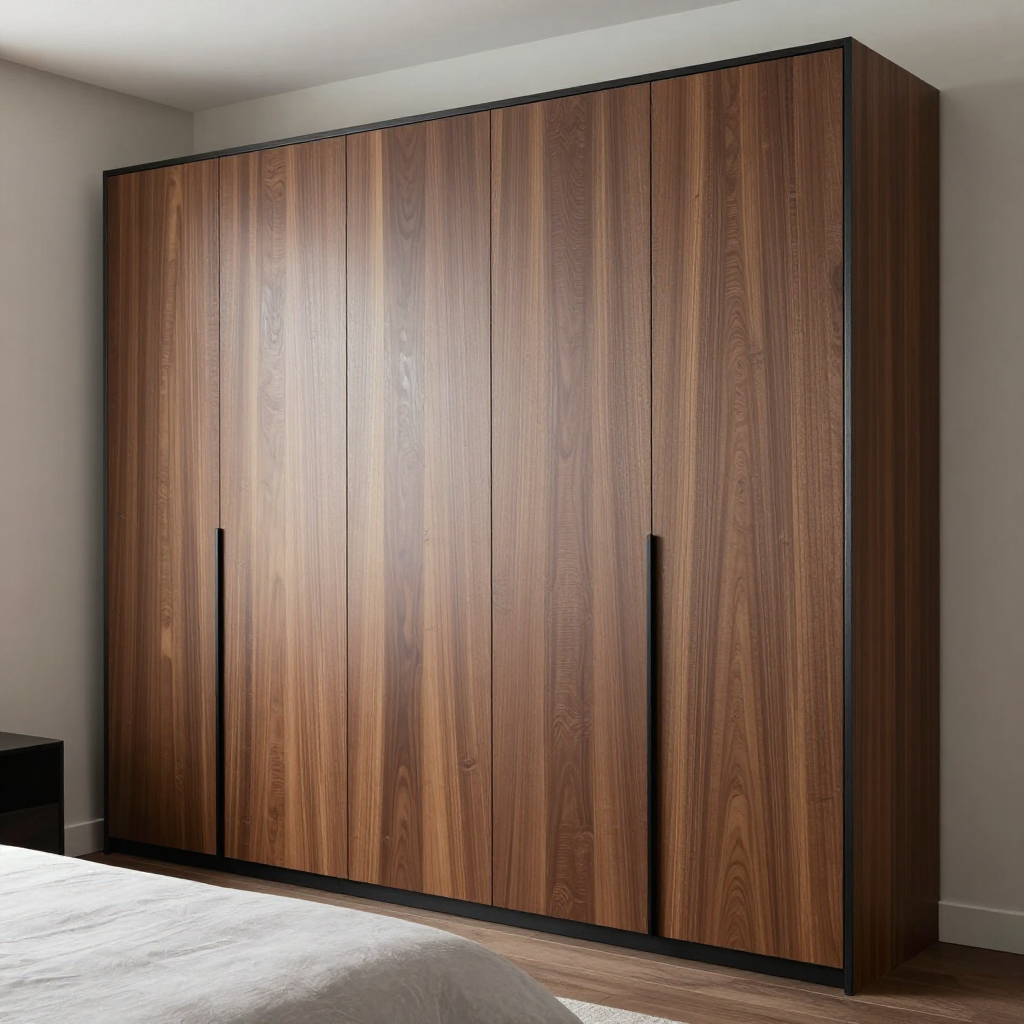
Veneers are paper-thin sheets of genuine hardwood (like teak, walnut, or oak) glued onto an engineered wood base. They are finished with a protective polish coating (like PU):
- Pros: Offers the authentic grain pattern, warmth, and organic beauty of solid wood. Because no two veneer sheets are identical, your wardrobe is completely unique. It can be re-polished after a few years to restore its original luster.
- Cons: Requires high maintenance. Veneer can scratch easily and is prone to fading if exposed to direct sunlight over long periods. It is also the most expensive option among the three.
- Best For: High-end master bedrooms, accent walls, and homes with classical, mid-century modern, or luxury transitional interiors.
Comparative Matrix
To help you decide, here is a quick ranking of the three materials:
- Cost (Affordability): Laminate (Most Affordable) > Glass > Veneer (Most Expensive)
- Scratch & Wear Resistance: Laminate (Best) > Glass > Veneer
- Ease of Cleaning: Laminate (Easiest) > Veneer > Glass (Needs constant wipe-downs)
- Aesthetic Luxury: Veneer / Glass > Laminate