Glass wardrobes have taken the interior design world by storm, transitioning from high-end European showrooms to modern Indian bedrooms. Featuring slim aluminum profiles and expansive glass panes, they represent the absolute height of contemporary, luxury design.
However, glass wardrobe doors are not a one-size-fits-all solution. While they offer undeniable visual advantages, they also present unique challenges. In this article, we weigh the pros and cons of glass wardrobes to help you decide if they are right for your home.
The Pros of Glass Wardrobes
1. Visual Expansion of Space
Because glass doors are reflective and semi-transparent, they allow light to pass through and bounce around the bedroom. This reduces the visual "bulk" of the wardrobe, making a small or medium bedroom feel significantly larger and more open.
2. Unmatched Luxury Aesthetic
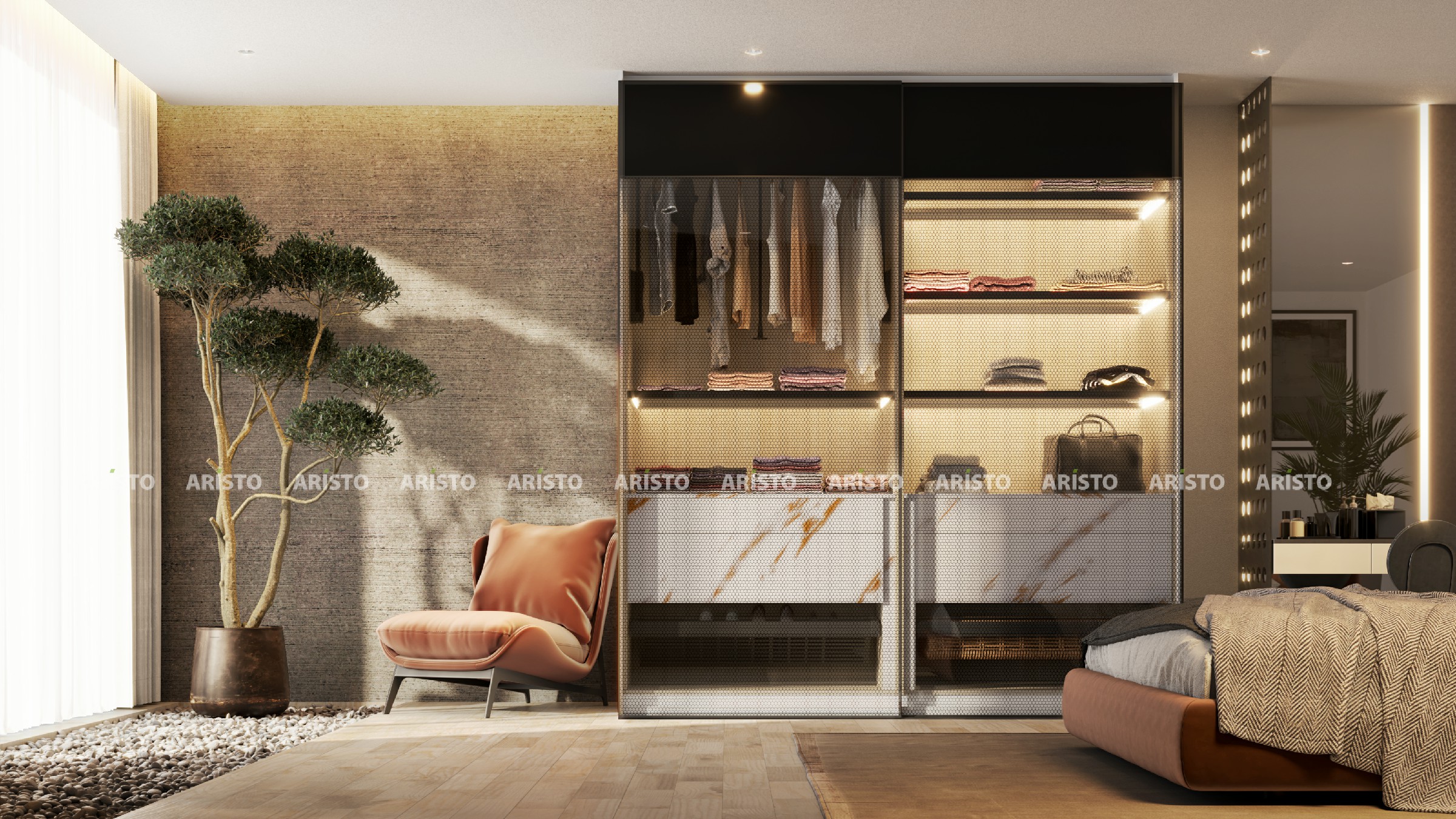
There is an inherent elegance to glass. Combined with dark aluminum frames (like the Aristo profile collections) and internal LED strip lighting, a glass wardrobe transforms your bedroom into a high-end boutique hotel suite.
"Tinted, smoked, or reflective glass doors provide a high-end, gallery-like display for your curated wardrobe collection."
3. Easy Visibility
Glass wardrobes save you time. You can scan your wardrobe and select your outfit for the day without opening a single door, keeping your clothing choices organized and easily visible.
The Cons of Glass Wardrobes
1. Mandatory Tidiness
The biggest drawback of glass wardrobes is that they leave nothing hidden. If your shelves are cluttered or clothes are unorganized, it is visible to anyone in the room. This makes glass wardrobes less suitable for kids' bedrooms or for those who prefer quick, unstructured storage.
2. High Maintenance
Glass is prone to fingerprints, smudges, and dust. Sliding or swinging glass doors will require regular cleaning with microfiber cloths and glass cleaners to keep them looking pristine.
3. Higher Price Point
Due to the cost of safety-tempered glass, specialty aluminum framing, and internal LED profiles, glass wardrobes generally cost 30% to 50% more than traditional laminate or veneer wardrobes.
How to Get the Best of Both Worlds
If you love the look of glass but are concerned about privacy or clutter, we recommend exploring these alternative glass finishes:
- Frosted or Fluted Glass: Offers a beautiful textured appearance that diffuses light while completely concealing the contents inside.
- Smoked or Bronze Tinted Glass: Dark, reflective glass that hides contents when the internal lights are off, but displays them beautifully when the internal LEDs are switched on.
- Hybrid Design: Use glass doors on select display sections (e.g. for coats, suits, bags) and solid wood, laminate, or lacquer doors for the rest of the wardrobe.